
BioGPU The cellular biology runtime for AI agents
Enabling AI to run cellular network experiments and close the loop with functional biology to design better, safer drugs.
Already built
Anima has already built BioGPU, the cellular biology runtime for AI agents: a foundation model-driven experimental platform developed over more than a decade.
Trained on over 2 billion proprietary images of cellular activity, the foundation model recognizes biological mechanisms as they unfold in disease-relevant cellular systems, enabling AI agents to observe and understand biology in action.
$150M+
BioGPU was developed with over $150 million received through strategic pharmaceutical collaborations with Lilly, Takeda and AbbVie.



What AI is missing
AI agents are blind to biology. With BioGPU, they see it.
Structure and chemistry come with decades of public data, and AI has learned them. What a drug does inside a diseased cell has no such dataset: it has to be measured, experiment by experiment. That is the biology that decides efficacy and safety, and it is what BioGPU gives AI.
The platform
BioGPU AI-to-Cell technology stack
One integrated stack: design goes down to the cells, evidence comes back up to the agent.
- AI agentsDesign and orchestrate cellular network experiments.
- Cellular network experimentsRun in patient-derived cells, 1,000+ experiments per run.
- Molecular-specific visualizersMake each molecular activity visible inside the network.
- Visual Biology Foundation ModelRecognizes the molecular activities and the network state.
- Visual Biology TokensCarry the evidence back to the agent.
Applications
Every drug acts on a network. Now AI can design against it.
Design loops today optimize binding and properties, and learn what a drug does to the cell much later, in animal studies and the clinic. BioGPU brings that response into the loop at the design stage, for every molecule AI proposes. The resolved network also informs target, mechanism and safety decisions before the first molecule is made.
Example · antibodies
After binding, a drug's biology begins. BioGPU brings it into the design loop.
The same loop applies across modalities. All therapeutic workflows →
Each program runs in a disease-relevant cellular system. 150+ have been run on BioGPU so far, including patient-derived cells, and others can be sourced or set up.
See the pharma workflow → See available targets → Explore cellular systems →
Experimental loop
Reason. Run. Recognize. Resolve.
Inside BioGPU, AI agents work directly on the cellular network. They reason on what the network shows, generate the next hypothesis and run the next cellular network experiment. Every experiment generates fresh data in patient-derived cells. The loop repeats until the network is resolved.
- 01ReasonThe agent reasons on the network state and generates the next hypothesis.
- 02RunBioGPU runs the experiment in the robotic lab.
- 03RecognizeThe Visual Biology Foundation Model recognizes the molecular activities across the network.
- 04ResolveVisual Biology Tokens return the result to the agent, which chooses the next experiment.
The core technology
A foundation model that knows what cell biology looks like.
Its training data did not exist before Anima produced it, and nobody else produces it.
Anima's Visual Biology Foundation Model has learned the visual signatures of protein interactions, translocation, translation, RNA localization and many more. This is what makes cellular network experiments machine-interpretable at scale, and it is what everything in BioGPU runs on.
Cellular network experiments
Biology works as a network. BioGPU interrogates it as one.
The BioGPU Agent places molecular-specific visualizers, fluorescent probes for the activity of proteins and mRNAs, at strategic points across the cellular network. They run together in one experiment in the robotic lab, so the biology comes back as one connected view, not as fragments from separate assays.
Visual Biology Tokens
Cell biology, in a form AI can reason on.
Visual Biology Tokens bring the cellular network state into the agent’s context window, so the agent can reason about functional biology. Each experiment produces thousands of tokens.
Intelligence that compounds
The more it runs, the more of the network it resolves, and the better it learns to see biology.
Every iteration adds Visual Biology Tokens and resolves more connections in the cellular network, and every experiment teaches the foundation model to recognize more of what it sees.
Team
Integrated capabilities across every discipline BioGPU needs.
Cell biology, imaging, chemistry, omics, systems biology, AI, software and drug discovery, integrated in one company. That combination is rare.
Leadership
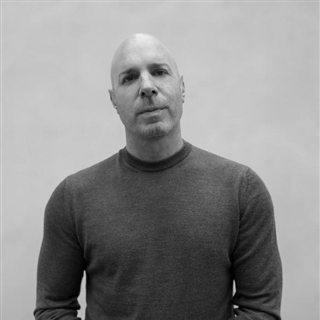
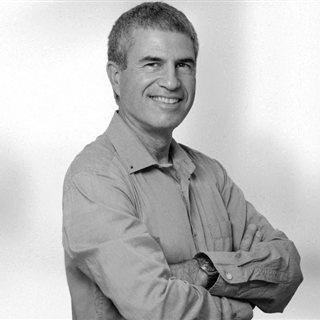
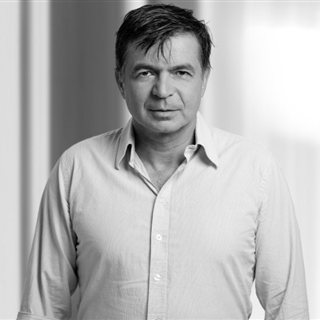
Yochi Slonim M.Sc., Co-founder & CEO, Board member
Iris Alroy PhD., Co-founder & CSO
Avi Eliassaf Chief Operating Officer
Yossi Oulu M.Sc., Vice President, Software Development
Generoso Ianniciello M.Sc., Chief Business Officer
Inbal Shapira Lots PhD., Vice President, AI & Data Science



Give your AI the biology it is missing.
Connect drug design with functional biology, for better, safer drugs. Your own agents can plug straight into BioGPU through its Runtime Skills.
Pharma team? See how your AI connects →
Reason · Run · Recognize · Resolve